eCourse
The Cost of Control: Transfer Tax Planning, Valuation Discounts, and the §2043(a) Double-Inclusion Trap
Contains material from Aug 2026
The Cost of Control: Transfer Tax Planning, Valuation Discounts, and the §2043(a) Double-Inclusion Trap
Not yet rated
Technical Questions?
512.475.6700
service@utcle.org
LLCs, LPs, and partnerships are among the most versatile and powerful tools in family business and estate planning, providing asset protection, consolidated management, simplified wealth transfer, and meaningful tax advantages across generations. This session opens with a practical overview of how these entities function in the estate planning arena and the key benefits they offer family-owned businesses, giving business lawyers and general practitioners a working framework for spotting planning opportunities and knowing when to bring in estate planning counsel. From that foundation, the session examines the benefits and hazards of entity-based transfer tax planning in depth, with particular focus on §2036 retained interest inclusion and the newly prominent, court-raised §2043(a) double-inclusion problem that recalibrates the math when the IRS wins.
Includes: Video Captions Audio Transcript Paper Slides
- Total Credit Hours:
- 0.75
- Credit Info
- TX, CA
- TX MCLE credit expires: 8/31/2027
You must be signed in, have purchased this eCourse,
and the eCourse must be active
to have access.
Sessions
Credit
1.
The Cost of Control: Transfer Tax Planning, Valuation Discounts, and the §2043(a) Double-Inclusion Trap
(Aug 2026)
(Aug 2026)
Gene Wolf
0.75
0.00
0.00
0.75
Downloadable Materials
Transcript
(txt)
Paper
(pdf)
– 36 pgs
Slides
(pdf)
– 56 pgs
Session 1 —47 mins 0.75
The Cost of Control: Transfer Tax Planning, Valuation Discounts, and the §2043(a) Double-Inclusion Trap
(Aug 2026)
LLCs, LPs, and partnerships are among the most versatile and powerful tools in family business and estate planning, providing asset protection, consolidated management, simplified wealth transfer, and meaningful tax advantages across generations. This session opens with a practical overview of how these entities function in the estate planning arena and the key benefits they offer family-owned businesses, giving business lawyers and general practitioners a working framework for spotting planning opportunities and knowing when to bring in estate planning counsel. From that foundation, the session examines the benefits and hazards of entity-based transfer tax planning in depth, with particular focus on §2036 retained interest inclusion and the newly prominent, court-raised §2043(a) double-inclusion problem that recalibrates the math when the IRS wins.
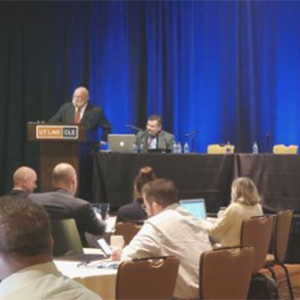
Originally presented: Jul 2026 LLCs, LPs and Partnerships
Gene Wolf,
Kemp Smith LLP - El Paso, TX